
Almost every conversation we have with enterprise clients about AI arrives, sooner or later, at the same question: "Does our data leave the building?"
It is the right question. But the answer rarely fits into "cloud" or "local". There are several options between those two ends, and each one trades something away: model quality, cost, time to deploy, or degree of control.
This article compares the four most common ways companies deploy AI today, the points that are often misunderstood about each, and a simple way to work out where your own organization should start.
The biggest risk is usually not the infrastructure
Before comparing architectures, one point is worth making clear.
In many companies, the largest data risk today does not come from a poorly designed AI system. It comes from employees using personal ChatGPT, Gemini or Claude accounts and pasting in contracts, source code or payroll sheets to "get it done faster". This is often called shadow AI.
In 2023, Samsung restricted staff use of generative AI tools after engineers entered internal source code into a chatbot. Cases like this are not rare. They are simply rarely made public.
So the first question is not "cloud or local?" It is this: does the company offer an official, controlled AI channel, so employees do not go looking for their own? Any of the options below is better than having no policy at all.
1. Public cloud AI through personal or consumer plans
This is the fastest way to start: sign up, use it immediately, no infrastructure needed.
Suitable for: experiments, marketing drafts, general research, and any task that does not involve customer or internal data.
Points to watch:
- Depending on the plan and settings, conversations on personal plans may be used by the provider to improve its models. Users can opt out, but the company cannot easily verify that every employee has.
- There is no central log. If something goes wrong, nobody can tell who sent what, or when.
- When an employee leaves, conversation history containing company data stays in their personal account.
2. Enterprise cloud AI: APIs, enterprise plans, or running inside your VPC
This option is often lumped together with the first one, yet from a security standpoint the two are quite different.
Platforms such as the OpenAI API, Anthropic API, Azure OpenAI, AWS Bedrock and Google Vertex AI all offer enterprise terms under which data sent through the API is not used for model training by default. With Bedrock or Azure OpenAI, models can also be called from inside the company's own cloud environment (VPC) over a private connection, with a chosen data region and logging that follows internal policy.
Strengths:
- Access to the strongest models available, with no GPU investment.
- Quick to deploy, low upfront cost, and it scales with demand.
- Access control, logging, encryption and integration with corporate identity systems are available out of the box.
Limitations:
- Data is still processed on the cloud provider's infrastructure. For some industries or contracts, that is not allowed, whatever the contractual commitments.
- Pricing is per token. An application that reads thousands of documents a day can see its bill climb quickly unless it is designed for cost from the start (caching, smaller models for simple tasks, limits on context length).
- Rules on transferring personal data abroad need to be checked (see the legal section below).
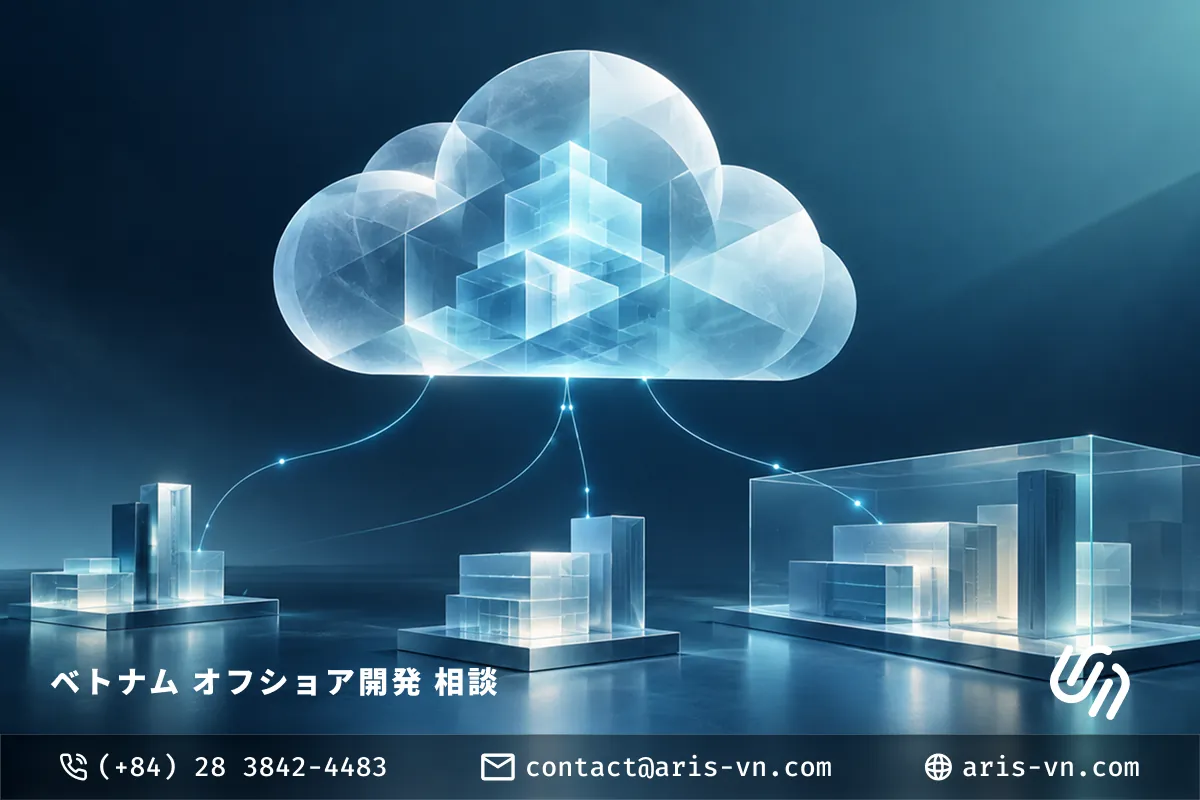
For most mid-sized and large companies, this is the most sensible starting point: safe enough for most internal data, with no compromise on quality.
3. Local AI: running models on your own infrastructure
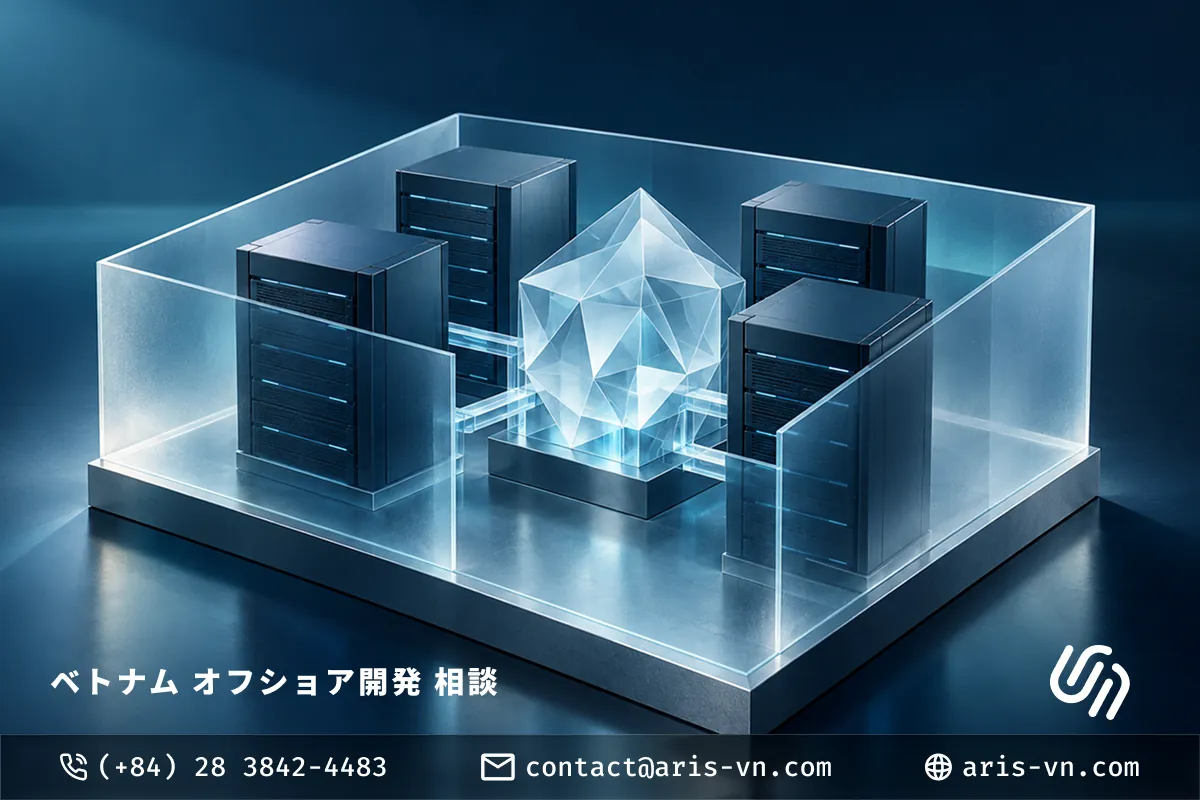
The company downloads an open-weight model (such as Llama, Qwen, Gemma or Mistral) and runs it on GPU servers in its office, its own data center, or dedicated rented servers.
Strengths:
- Data never leaves infrastructure the company controls. This is often mandatory for medical records, certain financial data, sensitive manufacturing data, or source code covered by strict confidentiality agreements.
- No dependency on an outside provider's policies or pricing.
- Can run in environments with no Internet connection (air-gapped).
Limitations, and claims that are often overstated:
- "Absolute security" does not exist. Data inside the internal network still needs permissions, encryption, logging and access control. An internal RAG system with weak permissions can let someone in sales ask their way into the payroll file.
- Running costs after the initial investment are not zero. Beyond the GPU servers, there is power, cooling, depreciation (GPUs typically age out within three to four years) and, most importantly, the people who keep it running: updating models, monitoring performance and handling incidents.
- There is a quality gap. Open-weight models have improved very quickly and handle many focused tasks well, such as summarization, classification, information extraction and answering questions over internal documents. But for multi-step reasoning, complex coding or long-form analysis, models that fit on a few GPUs still generally trail the leading commercial models.
Local AI is the right choice when data requirements make it mandatory, or when usage is large and steady enough that hardware beats paying per token.
4. Hybrid AI: routing by data sensitivity
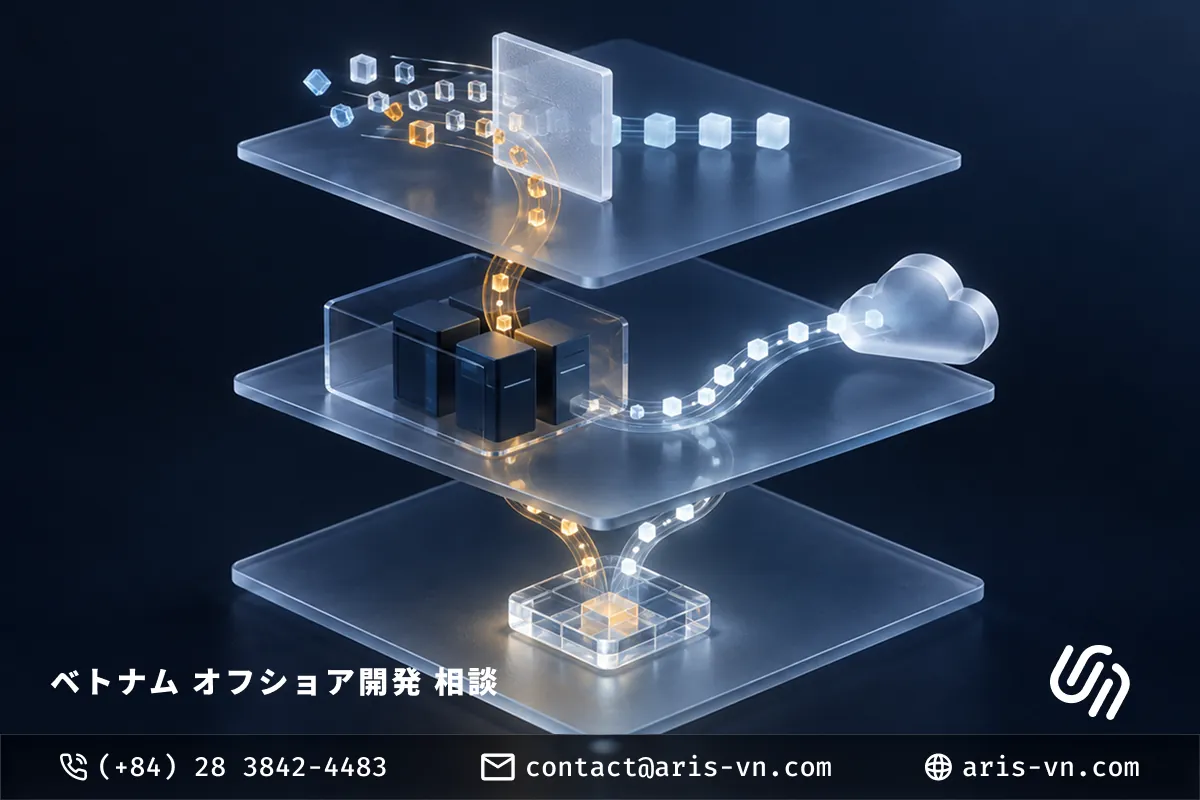
Hybrid is not a product. It is a design principle: each request is handled wherever suits the data it contains.
A typical hybrid architecture has three layers:
- A classification and masking layer that runs internally. A small model or a rule set detects sensitive information such as customer names, phone numbers, account numbers and amounts, and replaces them with temporary placeholders. Open-source tools such as Microsoft Presidio can help here.
- A routing layer. Requests containing data classed as "must not leave" are handled entirely by the local model. Requests that have been masked, or contain nothing sensitive, can go to a cloud model to benefit from its higher quality.
- A recombination layer. Results from the cloud have the real values put back inside the internal infrastructure before they reach the user.
Strengths: most work benefits from cloud model quality, while the most sensitive data stays inside. Internal GPU costs are also much lower than an all-local setup, because the internal model only has to handle lighter tasks.
Limitations to know in advance:
- Masking is never 100% accurate. Misspelled names, internal codes with no fixed format, or information inside scanned images can all slip through. Data in the most sensitive category should therefore be routed to local processing outright, not left to masking alone.
- Heavy masking strips context from the cloud model, and answers can suffer.
- The system is more complex: more components to run, monitor and test.
Quick comparison
| Criterion | Personal / consumer plans | Enterprise cloud (API, VPC) ★ | Local AI | Hybrid AI |
|---|---|---|---|---|
| Where data is processed | Provider infrastructure, hard to control | Provider infrastructure, under contract, region selectable | Entirely within company infrastructure | Sensitive data internally, the rest in the cloud |
| Model quality | Highest | Highest | Good for focused tasks, weaker at complex reasoning | Close to cloud for most tasks |
| Upfront cost | Near zero | Low | High (GPUs, deployment) | Medium |
| Running cost | Per seat | Per token, grows with volume | Power, depreciation, staff | Both, but smaller on each side |
| Time to deploy | Days | Weeks | Months | Months |
| Operational capability needed | Low | Medium | High | High |
| Best fit | Experiments, work with no internal data | Most internal applications and products | Data that must not leave, large and steady volume | Companies with both kinds of data in the same workflows |
How to choose: three questions to answer first
Question 1: What kind of data will go into the AI?
Sort your data into three groups, even if only on one sheet of paper:
- Public or low sensitivity: marketing material, general knowledge, published content. Any cloud option works.
- Internal: processes, operational reports, work email, most source code. Enterprise cloud with suitable contract terms usually covers this.
- Restricted: sensitive personal data, medical records, customer financial data, source code or documents under contracts that forbid external processing. This group decides whether you need local or hybrid.
If you have nothing in the third group, in most cases there is no need to invest in local infrastructure.
Question 2: How much will it be used, and how steadily?
Running your own GPUs only pays off when the machines are busy most of the time. A simple estimate:
- Monthly cloud cost ≈ requests per month × average tokens per request × the token price of the chosen model.
- Monthly local cost ≈ (hardware price ÷ months of depreciation) + power and cooling + the share of operators' time.
If the system is busy mainly during office hours, or volume is still fluctuating, cloud is usually cheaper. Once volume settles at a high level, the numbers start to favor local. Base the calculation on real usage from a few months of pilot, not on forecasts.
Question 3: Do you have people to run it?
Local and hybrid both require people who understand GPU infrastructure, model deployment, monitoring and security. If you do not have that team yet, there are two paths: start with enterprise cloud and move over gradually, or bring in a partner to operate it with you.
A common, lower-risk path: start with enterprise cloud for public and internal data, measure real volume, and only then decide whether a local component is needed for restricted data.
Do not forget the legal framework
In Vietnam, the Personal Data Protection Law took effect on 1 January 2026, building on Decree 13/2023/ND-CP. When an AI system processes personal data, especially when it sends data to servers located abroad, companies need to consider obligations such as data processing impact assessments and assessments for transferring personal data overseas.
For companies working with partners in Japan or Europe, contracts often add clauses on where data is stored and processed, under Japan's APPI or the EU's GDPR. Those clauses are sometimes the deciding factor in the architecture, ahead of cost.
This article is not legal advice. But it is worth bringing the legal team in at the design stage, rather than waiting until the system is already running.
Where ARIS Vietnam can help
ARIS Vietnam has more than 15 years of software development for clients in Japan and the region, many of them with strict security requirements. On AI projects, we usually get involved at three points:
- Assessing and choosing the architecture: working with you to classify data, estimate volume and cost, and pick the right approach rather than defaulting to one solution.
- Measured PoCs: building a pilot on real data within a few weeks, so you have quality and cost figures before a larger investment. See our AI development with built-in security and AI automation services.
- Integration with existing systems: connecting AI to ERPs such as Odoo, CRMs or internal systems, and deploying on AWS or on the client's own infrastructure.
There is no single AI architecture that fits every company. If you are weighing the options above, get in touch with ARIS Vietnam to talk through your own data and use case.
