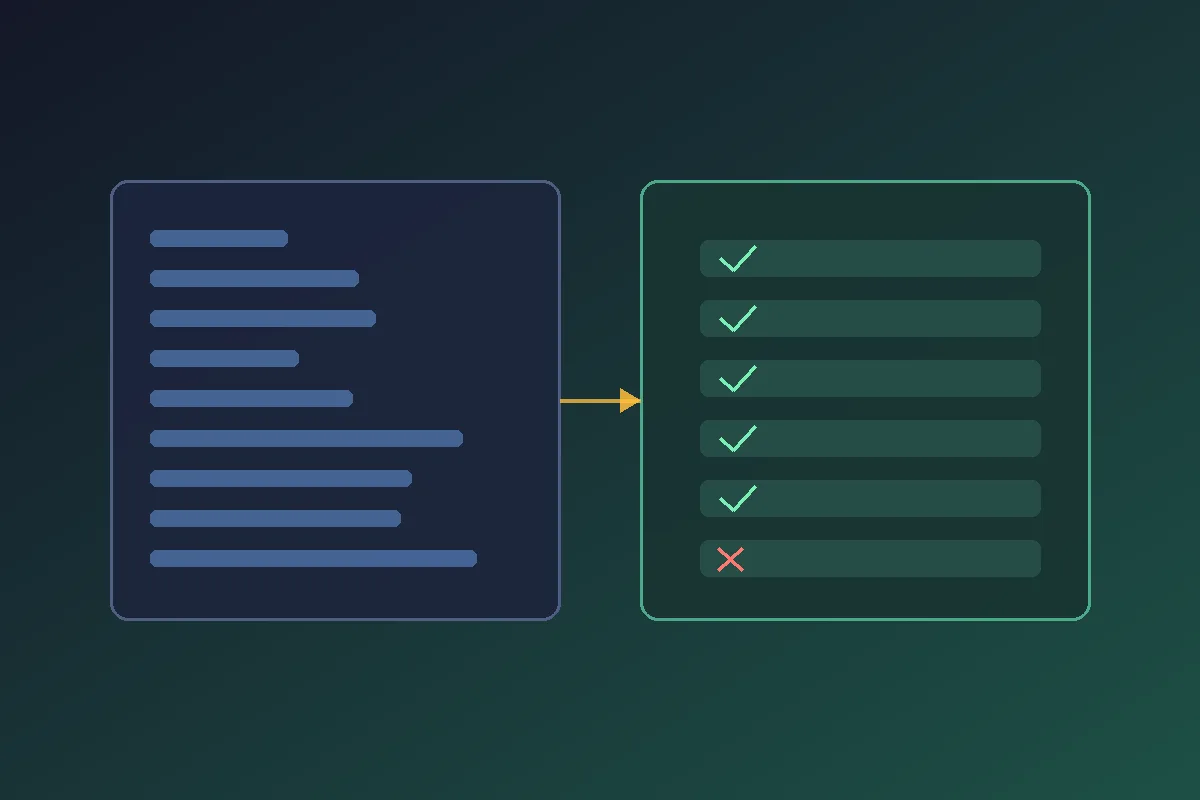
"Bugs keep surfacing after release and we're stuck firefighting." "Our developers test their own work, but the misses don't go down." "We can't staff the test phase, so development slips." Quality problems like these affect companies of every size and industry.
One answer gaining attention is third-party verification: testing done by a party separate from the development team. This article explains what third-party verification means, how it differs from in-house testing, the pros and cons of outsourcing it, how costs work, and how to choose a vendor.
What is third-party verification?
Third-party verification means having a party independent of development verify software quality, rather than the people or company that built it. In English it is also called IV&V (Independent Verification and Validation). It originated in fields such as aerospace and medical devices, where defects have serious consequences.
Today it is widely used in ordinary system development too, including web services, business systems and mobile apps, as a way to guarantee quality objectively.
How it differs from in-house or vendor testing
When developers or the development company test their own work, bias creeps in: "I know the spec, so I don't notice," or "the feature I built works." Test phases also tend to get squeezed as deadlines approach.
In third-party verification, a dedicated test team designs tests from the specification and verifies the system without being influenced by the development side's assumptions. Because evaluation is separated from the development team's interests, defect reporting is objective.
| Item | Testing by developers / development company | Third-party verification |
|---|---|---|
| Who tests | Developers, or members of the same company | Independent test specialists |
| Perspective | Assumes knowledge of the spec | User's and specification's perspective |
| Defects found | Mostly within what the implementer anticipated | Includes unexpected operations and boundary conditions |
| Time for testing | Easily compressed by deadlines | Planned as an independent phase |
| Reporting | Shaped by development's situation | Objective quality report |
Benefits of outsourcing third-party verification
1. Find more defects, earlier
Test specialists routinely use techniques such as equivalence partitioning, boundary value analysis and state transition testing. Testing that looks for the conditions under which things break, rather than confirming that things work, finds defects that developer testing tends to miss.
2. Developers can focus on development
Carving out the test phase lets engineers concentrate on design and implementation. With IT talent in short supply, this is also a way to use limited development resources well.
3. Quality becomes visible
Third-party verification reports the number of test cases, execution rate, and the count, severity and location of defects. Instead of a vague sense of unease, you decide release readiness on numbers.
4. Accountability to clients and users
When delivering contracted systems to customers, or in fields with strict quality requirements such as finance, healthcare and manufacturing, the fact that verification was done by a third party is itself a source of trust.
5. Easier adoption of test automation
Automating regression tests needs specialist knowledge and up-front effort, so development teams tend to defer it. When the verification vendor handles automation, tests repeated at every release become efficient.
Drawbacks and cautions
- Cost: external fees arise compared with doing it in-house. Weigh them against the cost of post-release defect handling and lost trust.
- Specifications need to be in order: the test team designs from the spec. If specs live only in conversations and chat, they need organising first.
- Ramp-up time: the test team needs time to understand the business context and assumptions. The benefit grows with continuous engagement.
- Coordination with development: agree the defect reporting, fixing and retest flow (ticketing tool, priority rules) in advance or communication stalls.
What can be outsourced
Third-party verification is more than executing tests. Depending on the vendor, scope can include:
| Phase | Content |
|---|---|
| Test planning | Scope, test levels, schedule, exit criteria |
| Test design | Test cases from specifications, test data preparation |
| Manual execution | Functional tests, UI and usability checks, browser and device coverage |
| Test automation | Regression automation, CI/CD integration, script maintenance |
| Non-functional testing | Performance and load, security, compatibility |
| Acceptance support | Helping the client define acceptance criteria and run UAT |
| Quality reporting | Defect trend analysis, release go/no-go input |
How far to go depends on your internal test capacity and how critical the system is. Many companies start with pre-release system testing or regression testing and expand once they see results.
How costs work
Third-party verification is typically priced in one of two ways:
- Per person-month (time and materials): number of test engineers × duration. Suits ongoing testing and running automation.
- Per deliverable (fixed scope): priced against deliverables such as the test plan, test cases and results report. Suits one-off pre-release verification.
Cost drivers include system size, test types (manual or automated, whether non-functional tests are included), the number of browsers and devices, and reporting frequency.
Doing third-party verification offshore, in Vietnam for example, tends to be cheaper than domestic verification firms, but whether specifications and reports can be handled in Japanese decides success. Rather than comparing unit rates alone, judge whether the team can understand specifications and design tests in Japanese, and whether defect reports are easy to read.
Quality assurance in offshore projects is also covered in Offshore development quality control and QA process.
How to choose a vendor
- Independence from development: giving testing to the same company that develops weakens third-party status. Check whether development and testing have separate organisations and leads.
- Test design techniques and track record: ask for sample test cases and check they are designed with recognised techniques.
- Automation scope: tools used (Playwright, Selenium, Appium and so on), CI/CD integration experience, script maintenance arrangements.
- Clarity of reporting: in a sample defect report, check that reproduction steps, expected result, actual result and impact are clearly written.
- Information security: testing may involve near-production data. Confirm data handling rules, access control and NDA terms.
- Communication in Japanese: for offshore, confirm there are members who can understand specs and design tests in Japanese, plus a Bridge SE or PM.
General checkpoints for vendor selection are in How to choose an offshore development company.
When third-party verification is especially effective
- Post-release defects continue and insufficient testing is the likely cause
- You want an objective check on your development vendor's test results
- You're modifying a long-running system and worry about regressions
- You're switching development vendors and want to know the current system's quality
- Releases are frequent and the same regression tests eat effort every time
- Finance, healthcare, manufacturing equipment: fields where defects hit operations or safety directly
Frequently asked questions
How is third-party verification different from user acceptance testing (UAT)?
UAT is where the client confirms the system works for the business. Third-party verification comes before that: a specialist team searches comprehensively for defects based on the specification. Verification vendors often also help define acceptance criteria and run UAT.
Can we engage a vendor if our specifications are incomplete?
Yes. Because the test team needs to understand the spec, work usually starts by organising specifications from existing documents and screens. Rather than waiting for a perfect spec, it is more practical to include that organising work in the engagement.
What should we check when doing third-party verification offshore?
Three things: whether there are members who can understand specs and design tests in Japanese, whether defect reports are written clearly in Japanese, and whether data handling rules are explicit. Comparing on unit rates alone can be misleading once communication costs are counted.
ARIS Vietnam's third-party verification and testing services
ARIS Vietnam is a Japanese-owned software development company with a base in Tokyo and development and verification centres in Ho Chi Minh City and Hanoi. Separate from our development teams, we have a QA team responsible for test design, manual testing and test automation, so quality can be checked with development and testing kept apart.
Our Japanese-speaking PMs and BrSEs handle everything from spec confirmation to test planning and defect reporting, so you can consult us even if "the specs aren't fully in order" or "we don't know where to start handing testing out." We have test experience across business systems, web services, mobile apps and software for manufacturing equipment.
See the QA and test automation page for service details, and the Vietnam offshore development page for offshore development in general.
Summary
- Third-party verification is objective quality verification by a specialist team independent of development.
- Outsourcing it brings earlier defect detection, a lighter load on developers, visible quality and faster adoption of test automation.
- Pricing is per person-month or per deliverable and varies with scope and test types. For offshore, Japanese-language spec understanding and reporting are essential.
- Choose vendors on independence, test design technique, automation scope, reporting quality, security and Japanese-language capability.
If you're facing questions about your test setup or quality, please reach out via our free consultation.
