The context: a partnership that demanded a fast cadence
In 2020, ARIS Vietnam was in a long-term partnership with a major multinational corporation. The scale and pace of the projects required the team to respond quickly, catch issues early, and adjust continuously — waiting until the end of a phase to discover problems was not an option.
To do this properly, both sides discussed and agreed to bring Agile/Scrum into how they worked together. This was not a matter of reading a few books and slapping an "Agile" label on existing processes; it was a deliberate agreement between ARIS and the partner on how the projects would run.
The partner sent a Scrum Master to train the team directly
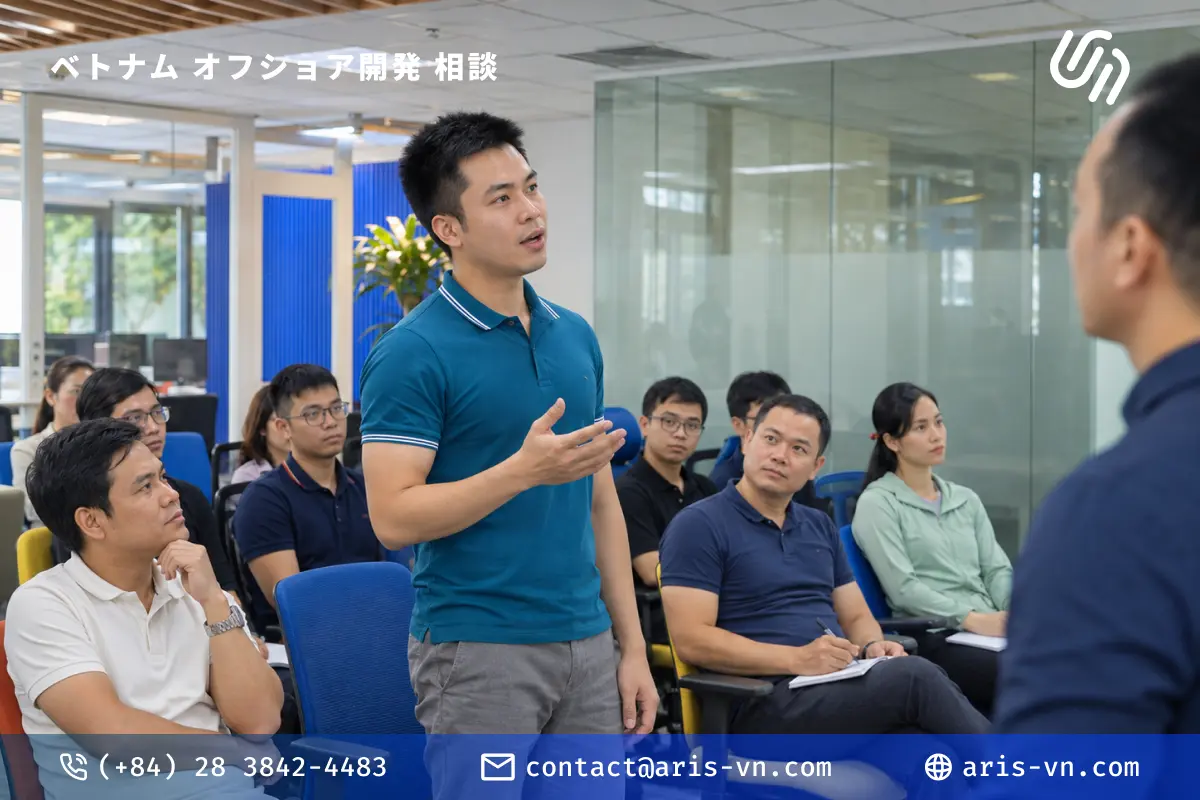
Once aligned, the partner sent an internationally certified Scrum Master to our Ho Chi Minh City office to run an in-person Scrum/Agile workshop with the team. Being trained by someone with real expertise and hands-on experience — rather than figuring it out alone — helped the team understand and practice it correctly from the start.
What the workshop covered
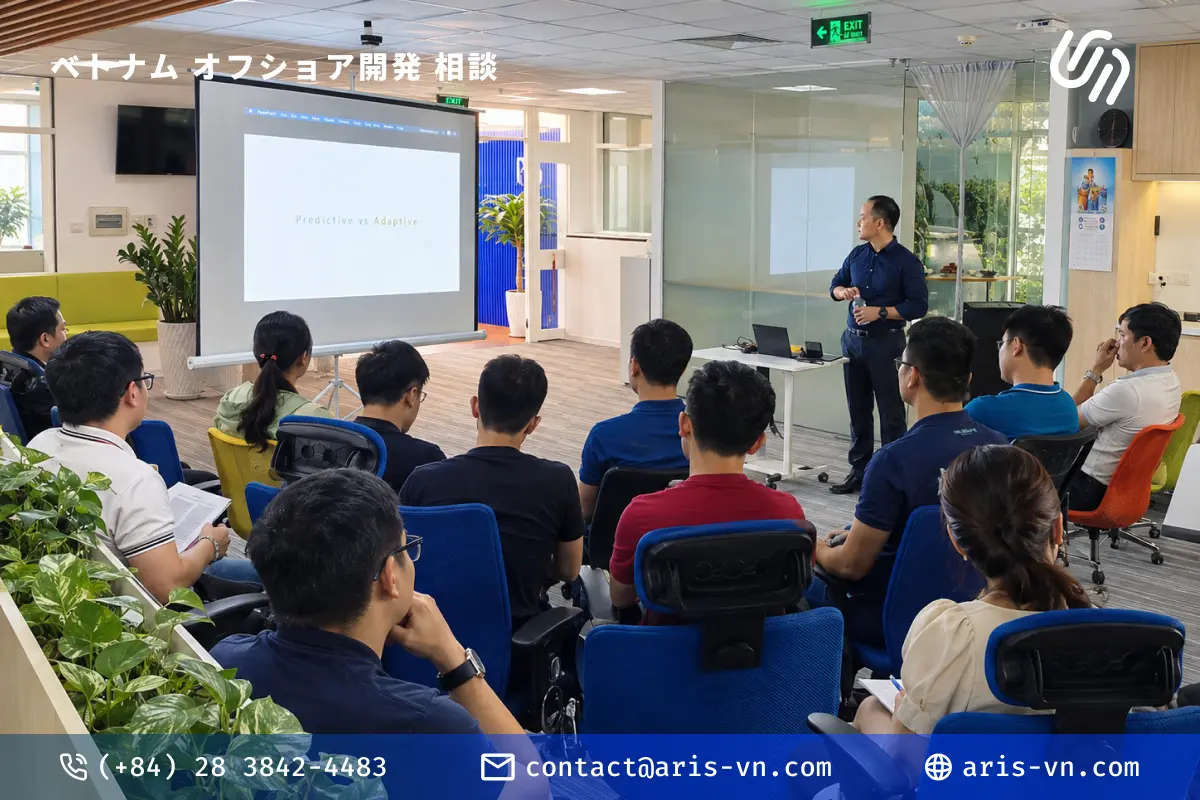
The trainer started from fundamentals: the difference between Predictive (planning everything in detail upfront) and Adaptive (adjusting continuously based on real feedback) — two foundational mindsets that, if you cannot distinguish them, tend to leave any framework superficial.
From there, the team practiced the core elements of Scrum: roles (Product Owner, Scrum Master, Development Team), sprint planning, daily standups, sprint reviews, and retrospectives — not in theory, but grounded in the context of real projects running at ARIS.
Result: 13 consecutive projects adopted
After the workshop, the ARIS team applied Scrum/Agile across 13 consecutive projects with that same corporation. Not a one-time experiment that reverted to old ways, but continuous, project after project, improving through each retrospective.
Today, ARIS continues to apply Agile/Scrum where it fits. Not every project needs Scrum — maintenance work, short-term projects, and fixed-requirement projects still follow traditional models. But when a project demands flexibility, rapid feedback, and close collaboration with the client, Scrum is the team's natural choice.
From a partner's transfer to our own capability
What matters is not a single workshop, but what happened afterward. The knowledge from the partner did not stop at one project: the ARIS team absorbed it, adapted it to its own context, and sustained it through each retrospective — making Scrum part of how the team works rather than a process imposed from outside.
For ARIS, a strong team is not built by hiring the right people alone, but by learning the right way at the right time — and keeping and scaling what it learns. That is how capability accumulates, project after project.