Introduction
Offshore development can run entirely online. Even so, meeting the team in person at key moments, such as the kickoff, a requirements workshop or acceptance testing, reduces misunderstandings and makes the rest of the project run more smoothly.
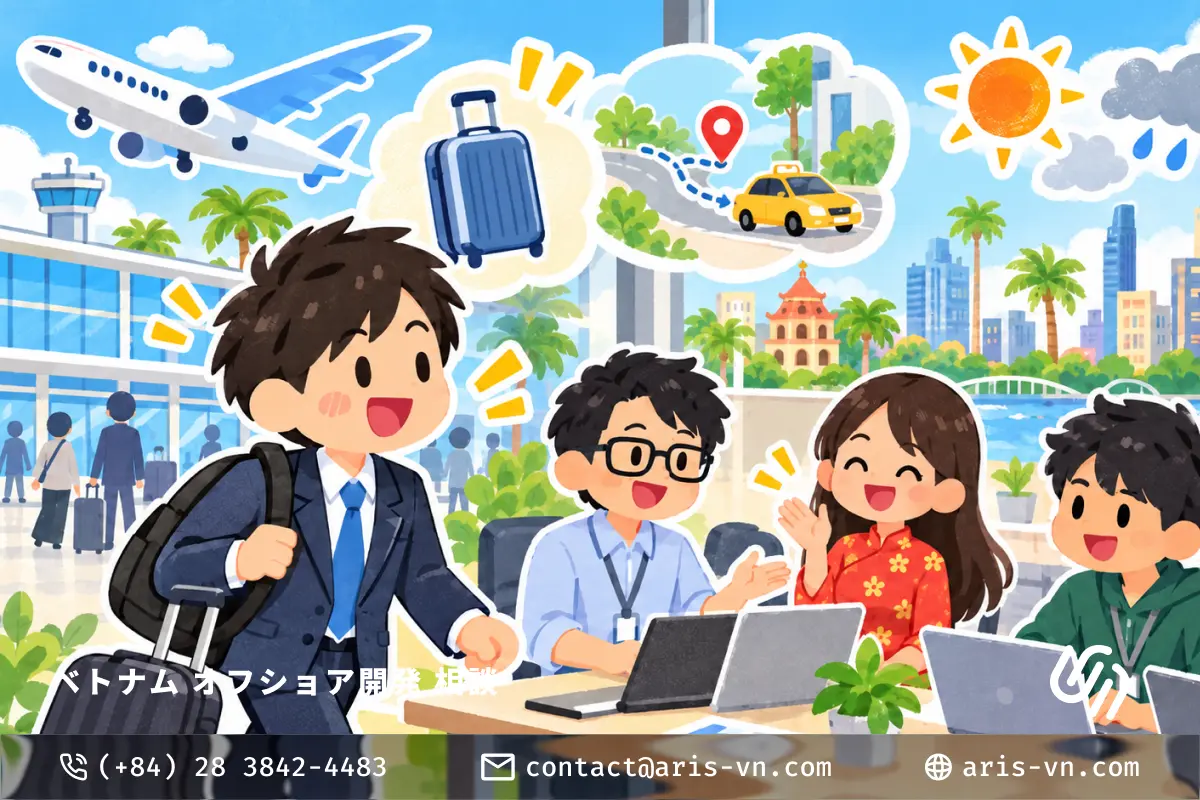
This article covers what to know before visiting a development team in Vietnam: policy, visas, climate and getting there. It also describes the accommodation and workspace ARIS Vietnam provides for partner companies. For why Vietnam is chosen as an offshore destination in the first place, see Offshore Software Development in Vietnam.
Visa and policy information is current as of October 2026. Please check the latest requirements with the Vietnamese embassy before you travel.
1. Japan–Vietnam ties and policies supporting the IT industry
Japan and Vietnam upgraded their relationship to a Comprehensive Strategic Partnership in 2023, deepening economic and people-to-people ties. Many Vietnamese companies build software for Japanese clients, and a growing number of engineers study Japanese.
On the policy side, Vietnam's Law on Digital Technology Industry took effect in January 2026. It names digital technology fields such as software development and AI as priorities for investment incentives, as part of a national push to grow the sector.
2. Visas: Japanese citizens can stay up to 45 days without a visa
- Visa exemption: Japanese passport holders can generally enter Vietnam visa-free for stays of up to 45 days (the measure has been extended to March 2028).
- Longer stays: An e-visa valid for up to 90 days can be applied for online.
- Passport: Must be valid for at least six months from the date of entry.
Depending on the purpose and length of your stay, a business visa or other procedure may be required. If you plan a long on-site assignment, please talk to us beforehand.
Other nationalities have different visa rules; please check the requirements that apply to you.
3. Climate: warm all year in Ho Chi Minh City
Ho Chi Minh City is warm year-round, with average temperatures of roughly 27–29°C. There are two main seasons.
| Period | What to expect | Tips for visitors |
|---|---|---|
| Dry season (Dec–Apr) | Little rain and comfortable; March and April are the hottest | A good time for business trips; bring sun protection |
| Rainy season (May–Nov) | Short, heavy afternoon showers on many days | It rarely rains all day; allow a little extra travel time |
Vietnam is two hours behind Japan (UTC+7), so when the working day starts in Tokyo it is 7 a.m. in Vietnam, which makes morning meetings with Japan easy to join.
4. Getting there: about 10 minutes from the airport
There are direct flights to Ho Chi Minh City's Tan Son Nhat International Airport from Narita, Haneda, Kansai and other Japanese airports, taking around six hours.
ARIS Vietnam's Ho Chi Minh City headquarters is about 10 minutes by car from Tan Son Nhat International Airport. On a morning flight from Japan, you can start meetings the same afternoon. Our staff will meet you at the airport.
5. Accommodation and workspace for partners
To let partner companies focus on their work while in Vietnam, we provide the following.
Company housing (free of charge)
During your stay you can use our company housing free of charge. The length of stay is agreed according to the purpose of the work, and longer stays are also free.
Workspace at our office
 A dedicated desk
 Wi-Fi
 Meeting rooms with monitors
 A pantry with coffee and drinking water
Working on the same floor as the development team means spec questions and screen reviews can be settled on the spot.
6. When to visit, and how to make the most of it
| Timing | Main purpose |
|---|---|
| Project start | Kickoff; agreeing on team structure and working rules |
| Requirements and design | Workshops on business flows and screen mock-ups |
| Before release | Joining acceptance testing; operations handover |
Sharing an agenda and the points you want to confirm with the BrSE and PM in advance helps you make the most of a short visit. See also What Is a Bridge SE (BrSE)? and Offshore Development Communication: How to Prevent Misunderstandings.
FAQ
Can we visit just for a short tour?
Yes. Short visits of a few days and office tours are welcome. Let us know once your dates are set.
How long can we use the company housing?
The length of stay is agreed according to the purpose of the work. Longer stays are also free of charge.
Is it easy to schedule meetings with Japan?
With only a two-hour time difference, working hours overlap almost entirely. The Vietnam team can join morning meetings in Japan from the start of their day.
Conclusion
Vietnam is about six hours from Japan by direct flight, and Japanese citizens can visit for up to 45 days without a visa. At ARIS Vietnam, partners get an office about 10 minutes from the airport, free company housing and an airport pick-up, so they can focus on the work on site.
To plan a visit, please contact us.
