
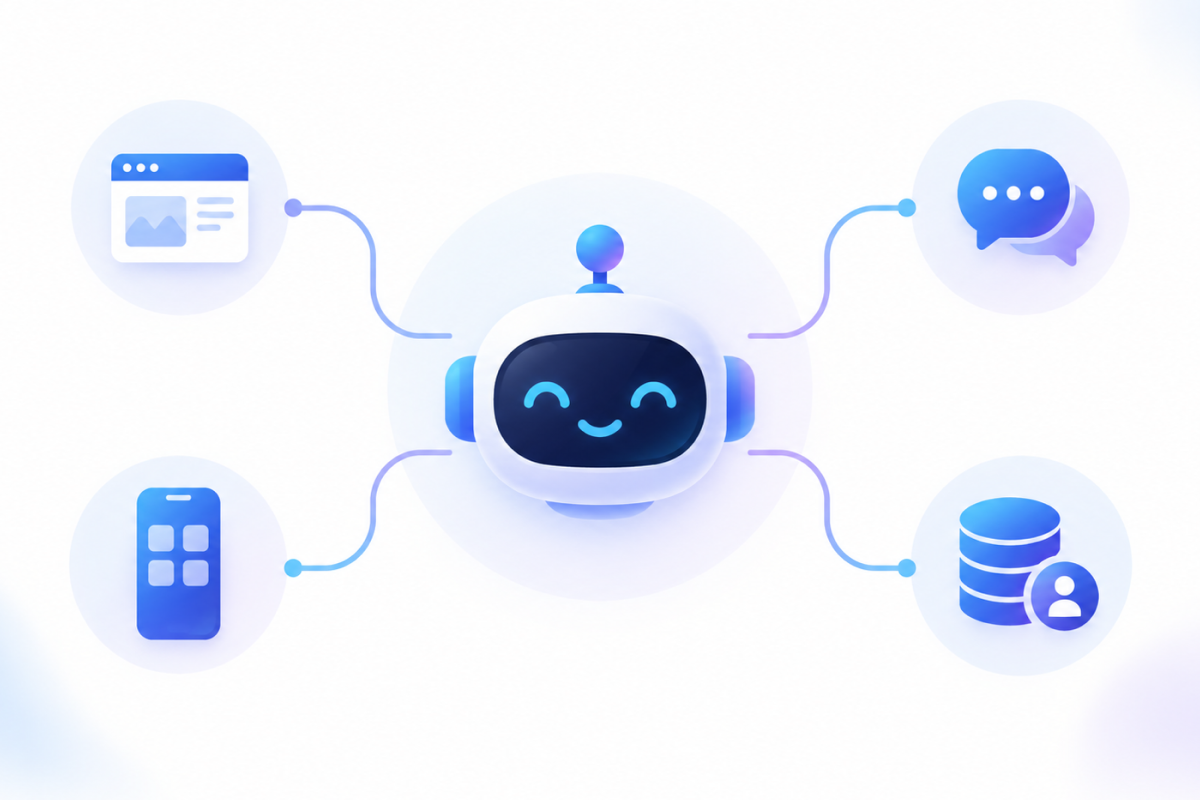
Many businesses are now considering AI chatbots to support internal information lookup, reduce the load on support teams, and improve the user experience. This article shares the general process ARIS Vietnam follows when developing and integrating an AI chatbot solution for clients.
Why businesses consider an AI chatbot
As internal documents, processes, and operational data grow faster than manual lookup can keep up with, staff often end up answering the same questions repeatedly. A well-built AI chatbot can act as an intelligent information retrieval layer, helping users find the right content faster.
The value an AI chatbot brings
- Faster lookup: Users ask questions in natural language instead of searching manually across multiple documents and systems.
- Less load on the support team: The chatbot handles repeat questions, freeing the team to focus on issues that need deeper expertise.
- Continuous availability: The chatbot can respond outside office hours, without depending on a specific person being available.
- Standardized information: Answers are drawn from a verified data source, reducing the risk of inconsistent information across departments.
ARIS Vietnam's development and integration process
- Requirements analysis: Define the data scope, target users, and specific goals the chatbot needs to meet.
- Architecture design: Build an architecture with clear access control, governing the data sources fed into the chatbot from the start.
- Development: Build the chatbot on the defined data sources, so answers stay grounded in the actual context.
- System integration: Connect the chatbot to the tools, platforms, or channels the business already uses.
- Testing and phased rollout: Start with a clearly defined data scope, validate answer quality, then expand.
- Operational support: Work with the client after launch to track performance and make adjustments as needed.
Points to consider when deploying
- Data security and access control: The chatbot needs to respect the access boundaries of each user group — it shouldn't be able to answer every question for everyone.
- Information accuracy: The chatbot's data sources need to be tightly controlled and kept current, to avoid wrong or vague answers.
- Integration with existing systems: The chatbot needs to connect with internal data sources and tools, rather than exist as a separate, standalone tool.
Summary
An AI chatbot can bring real value to a business when it's designed with data security and information accuracy in mind. It isn't an off-the-shelf product that works the same way for every business — it needs to be built around the specific data and operational processes involved.
If your business is considering an AI chatbot or another custom AI solution, ARIS Vietnam is ready to discuss the right approach for your case.